
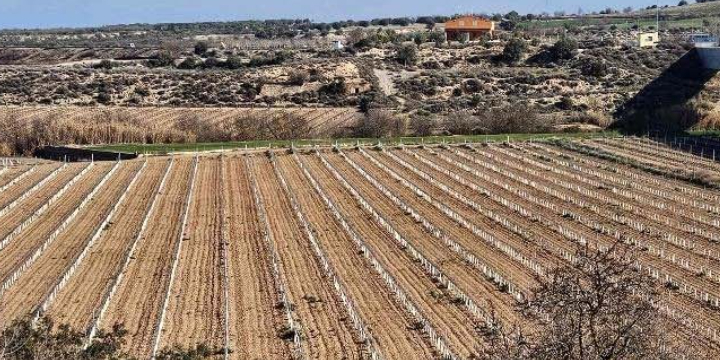
The LOBESIA project, focused on controlling the grapevine moth pest (Lobesia botrana), has already started to generate relevant results that help better understand why, in certain wine-growing areas, conventional control systems based on mating disruption have lost effectiveness. The consortium is composed of ADV Raimat, ADV Vall del Corb, Codorníu, and is coordinated by INNOVI.
Developed mainly in the DO Costers del Segre, with a special focus on the Raimat area, the project arises from the sector’s concern over the increasing presence of the pest despite the continued use of pheromones for its control.
Initial results indicate that the loss of effectiveness of mating disruption is not widespread, but rather linked to specific local factors. In this regard, comparisons with areas such as Valls del Corb, where the system is still working properly, have been key to identifying significant differences in pest behavior.
Among the main preliminary findings is the detection of high pressure of Lobesia botrana in the Raimat area, with up to four generations per year. Particularly noteworthy is the presence of a fourth generation acting as a winter reservoir, contributing to the persistence of the pest between seasons.
The project has also identified possible causes explaining this situation, including:
These results have been obtained through a combination of field data analysis, overwintering studies, laboratory experiments, and intensive pest monitoring.
Based on the knowledge generated, the LOBESIA project is already laying the groundwork for a new integrated pest management strategy. This approach combines optimized use of pheromones with complementary measures, aiming to improve control effectiveness and reduce reliance on chemical treatments.
Among the first practical recommendations derived from the project are:
The project’s progress represents an important step towards more sustainable and resilient viticulture, especially in a context of climate change and increasing pest pressure. The knowledge generated will help winegrowers better adapt their control strategies, improve farm profitability, and move towards more environmentally friendly production models.
The LOBESIA project will continue working on field validation of the new strategies defined, with the aim of transferring these results to the wine sector in the coming months.
Action under the CAP Strategic Plan 2023–2027 co-funded by:
r:

Comments